
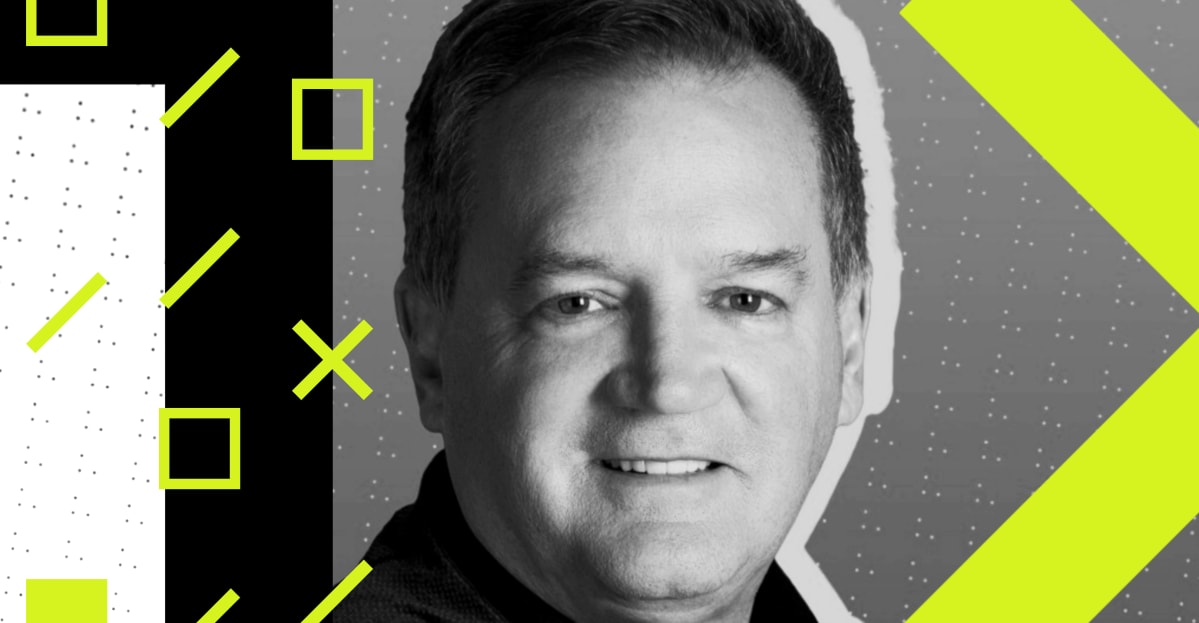
Posts from this topic will be added to your daily email digest and your homepage feed. Posts from this topic will be added to your daily email digest and your homepage feed. Posts from this topic will be added to your daily email digest and your homepage feed. After taking over Weber, Blackstone founder Roger Dahle’s new job is integrating his griddle empire with what used to be his biggest competitor. If you buy something from a Verge link, Vox Media may earn a commission. See our ethics statement. Posts from this author will be added to your daily email digest and your homepage feed. If you buy something from a Verge link, Vox Media may earn a commission. See our ethics statement. Posts from this author will be added to your daily email digest and your homepage feed. It’s time for our annual Fourth of July grill episode here at Decoder . This is when we invite the CEOs of outdoor cooking companies onto the show to explain just how their businesses kind of look like every other business. And this is a very special edition. Today I’m talking to Roger Dahle, the CEO of Weber Blackstone, a full circle moment for Decoder . Roger was our first-ever grill CEO on the show back when he was the CEO of just Blackstone — a griddle company he started in 2008 that exploded in popularity during the pandemic, when videos of smashburgers went relentlessly viral on TikTok. Verge subscribers, don’t forget you get exclusive access to ad-free Decoder wherever you get your podcasts. Head here . Not a subscriber? You can sign up here . Blackstone grew so fast and so furiously that Roger was able to buy Weber a couple of years ago , a legacy company that had fallen on hard times. Fun fact: We asked Roger to come on the show last year to talk about the merger, but it was stuck in antitrust review at the Federal Trade Commission. So Roger and I talked about that, what competition review entails for grill companies, and what it takes to manufacture these products overseas and import them into the United States in an age of high tariffs and high energy prices that are pushing consumers down market. We also talked about what it means to merge with Weber, a storied company with iconic products that had become pretty stuck in its ways and pretty siloed. Roger now seems very eager to break those silos down and create a better combined company with a new culture. As I said, there’s a lot in this one — including whether the chip market is affecting Weber’s connected thermometer business. It’s pure Decoder bait through and through, and Roger was great in this episode. Okay: Weber Blackstone CEO Roger Dahle. Here we go. This interview has been lightly edited for length and clarity. Roger Dahle, you’re the CEO of Weber Blackstone. Welcome back to Decoder. I am thrilled to have this conversation. Five years ago, in 2021, we thought it would be so fun to talk to grill CEOs in the summer because one of our theses here on Decoder is that all these companies have the same problems, and also, it’s the summer, and we should go talk to grill companies. At the time, we made a list of all the companies we wanted to talk to, and we put Weber at the top because they were the big brand name. They said no. And I said, “We’ve got to talk to Roger at Blackstone, because I’m watching TikTok every day and Blackstones are going viral on TikTok.” So we started with you. You were our first ever guest in this series , and now you’re the CEO of Weber. I feel like that is just about as perfectly full circle as it gets. So thank you so much for coming back. I didn’t see that coming when we talked a couple of years ago. A lot has happened. Weber was bought by private equity. You had a SPAC that came and went , you didn’t go through with it, and then you bought Weber . Let’s just talk about how all of this came together. Blackstone’s been around since 2008. We won’t go through the whole history. People can go listen to our last interview if they want to. You started the company in 2008. You went super viral in 2021. You did a lot. How did you end up in the position to combine with Weber, which really turned out to be more of an acquisition? So, it’s interesting. I have to go back to 2015. Blackstone was growing so fast that I needed to get a manufacturing partner that I could rely on and trust, and I knew a family from Taiwan that had facilities in mainland China, a father-son combination. They’re good friends. They had never been in outdoor cooking before. So we started together, and they in fact became an equity partner in the business in 2015. They were building for me a little bit before then. The business was so successful and grew so rapidly from 2015 through 2020 that… The father of the father-son combo was at retirement age, and he wanted to slow down. So they were looking to sell their equity in the company, which started this whole process of me going into the financial markets, talking to investment bankers, and going through that whole process, which led to almost going public via the SPAC. During that time and through some of those roadshows, I met Byron Trott, who owns BDT. He has owned Weber since 2010, if you can believe it. So his company has held onto that position for over 16 years now. He loved the story of Blackstone, and we actually went through a pretty serious process with them about a potential acquisition of Blackstone. Originally, yeah. But it just wasn’t right. The timing wasn’t right. There were just a few things that didn’t line up at the time, so we ended up not doing that transaction. That’s when we almost went public via the SPAC, and then, as you know, the financial markets fell to pieces. Weber and Traeger, coincidentally, had already gone public, and their stocks had a horrible experience . They came out, ran high, and then went really low. So, the SPAC deal didn’t work. At that point, I did find a financial partner — a private equity group that took possession of my Chinese manufacturing partner’s shares. That was in 2022. And then in 2024, we continued to grow at Blackstone and had phenomenal success. We were very fortunate. Again, we had accomplished in two years what that financial partner thought would take five. So we decided to test the waters and see what the next transaction looked like. Byron found out that I was thinking of that again, called me up, and said, “Let’s do a merger. Let’s not do an acquisition, but let’s merge these two companies together.” So we came to an agreement by the end of 2024, and then we had to go through the antitrust process with the Federal Trade Commission, and that took until May of 2025. So we’ve been merged together now for just barely over a year. It’s funny, we asked you to come on the show last year for this episode because we’d heard about all this, and I thought, “This is fascinating. We have to get Roger back.” But you declined because you were in the middle of this antitrust review process. I’m curious about that. This is the Trump administration. They’re historically very friendly to deals. This is not Lina Khan’s FTC. Why did it take so long? Why was it so complicated? This isn’t like a big tech deal. This isn’t Paramount. It was an easy deal. Unfortunately for us, we signed our agreement in December, and that’s when the clock started ticking with the FTC. Well, they’re not going to get anything done in December with all the holiday breaks. They have 30-day windows to look at your deal and say, “Yes, you can merge, or “No, we want to take a further look.” So they extended that until the end of February. Then they extended it one more time because all the commissioners and the new administration hadn’t been appointed yet. So we just really got stuck in no man’s land because they have five commissioners in Washington, DC, as I understand. I think two were in place or three, but they needed all five to be in place. As soon as they were fully staffed, they called us up and said, “Yeah, your deal’s fine. Go ahead.” So it just took a minute. I think we were just in the middle of the transition with the new administration. Yeah. I look at the grill industry, the outdoor cooking industry, as you call it, and there seems to be a surplus of competition. There are infinite brands showing up constantly. Last year, we had the CEO of SharkNinja on the show . They had just put out a grill because they saw an opportunity in the space. Do you feel like you’ve reduced competition by acquiring Weber? Do you think that the competition’s getting more ferocious? Competition is always there. And the other thing about our industry is that in outdoor cooking, every major retailer has their own in-house brand, a private label. I could own every outdoor cooking brand in the world, and I still couldn’t affect the consumer retail price because my customer is really in charge. They walk into a store or go online, wherever they might find our products for sale, and if they don’t like the retail price, they don’t buy it. So the FTC is really focused on competition and making sure the consumer is protected, which I love. I think I have no problem with that. I want the consumer taken care of and protected as well, but my business is very competitive. There’s always somebody new coming along, like SharkNinja, who’d never been in the business before, and then people who’ve been around for a long time, competitive companies that have been around for a long time. Then, on top of it, I have my retail customers with their own private label brands. So if retail prices get out of hand — or if they think they’re too high or if they think a product has been more commoditized — they put their private label brand on it and offer it to their customers. Do you supply any of that private-label stuff? I don’t think Home Depot is actually manufacturing some grills. Do you supply any of that white-label product? I don’t, but I know most of the suppliers, the factories in Asia, who do. Are they competitive with you? Are they price sensitive to you? There’s just a market that I think is so physical, the products are so big, and then they do turn. People buy new ones kind of all the time. So it’s just a different kind of competitive dynamic to have the white label supplier right there, and so top of mind for you. Yeah. It’s really a go-to-market strategy that each retailer deploys, how they think about it, what retail prices they want to offer their customers, and what features and benefits they want to offer at those price points. So if they can better serve that price point and that feature set using their own label, they will. But if a brand… for example, with Blackstone, for a long time, none of my customers carried an in-house griddle, because they wouldn’t sell. They put them out there, and people would step over them, around them. I don’t mean physically, I mean over the price point to buy a Blackstone. So we were very fortunate that way. But if you look at gas grills, Lowe’s, Home Depot, most of the retailers, even Walmart, carry a house brand because they can offer their customers the value they want at that retail price point. So it’s really a merchandising strategy that they use, and I think it works. I think it’s great for the customer. It’s tough right now at retail, as I’m sure you’re aware. Oh, yeah. I want to come to manufacturing the products. You’ve mentioned China several times already. Obviously, that’s changing that dynamic. We’re in the heart of summer. I’m sure this is the high season for you. It’s not getting easier. I want to come to that, but I just want to stay in the deal for one second. Weber is the household name. As I said, we made the list of grill CEOs, and obviously, we put Weber at the top. You are now the CEO of Weber. My understanding is that Weber’s business was not doing very well, that there was some inherent flaw in that business. We’ve done a lot of episodes about private equity takeovers and how the PE firms tend to extract the profits and not invest in innovation, especially for big legacy companies. Was that your assessment of Weber? Was that the opportunity? No. BDT is a phenomenal financial partner. I mean, I love working with them, and Byron Trott is at the top of the list, I think, behind the scenes in that industry. Weber, in my opinion and in my assessment, when we took over and started being able to look… Because until we had FTC clearance, 100 percent clearance, we couldn’t really see anything other than public information. But it’s a typical legacy type company with a big brand, great presence, great product, phenomenal quality, and really good people. I love the people who were working there and the culture that they had. But in my opinion, there had been some C-suite turnover that was way too high, and different philosophies on how to serve the customer, so as a result, expenses got way out of hand. And then, as you know, a private company versus a public company, the cost structure is completely different, and there’s a lot of expense in being a publicly traded company that hasn’t come out of the business yet. So the product sell-through-rate at retail, and the perception among user-customers has never been better. It’s extremely well off, but the profitability of the company was challenged and needed a different approach. I think it’s why Byron wanted to merge us, because we just do things completely opposite of the way they had done it traditionally at Weber, and especially over the last… I’m going to say seven years. For many years, the Stephen family, with George Stephen as the founder of the business… His son Jim took over as CEO for a long time until they sold to BDT. They’re a great, profitable business. From 2019 to 2020, they did extremely well. So it was really the last five, six, seven years. I just want to clear up the timeline here for listeners because you’re talking about BDT a lot, and they’ve been in and out of Weber for a long time. It’s true. So they bought a majority stake in Weber in 2010, then Weber IPO’d in 2021. It didn’t go well, right? They only raised $250 million . I think their target was $500 million. In 2022, BDT took Weber private again . So then they were full owners, and then obviously in 2024, you announced you were going to combine. Were they sort of immediately looking for a buyer, or was it just that you showed up and they happened to know you quite well? I don’t think they were really looking for a buyer. The merger made a lot more sense, especially by combining the strengths of both companies and then just cleaning up. It’s a phenomenal opportunity. We have a legacy brand, and Blackstone is innovative, disruptive, and still growing. So yeah, it’s a great combination. It’s been a lot of fun so far. Tell me about the mechanics of this. You’re saying the way you do things is different from the way Weber had done things traditionally. They are a legacy brand. They’ve been around since the 50s. There’s a world in which they just have to keep selling
المصدر: عرض الخبر الأصلي


 مرحبا، أسمي زين وهذه مدونتي أسعى دائما لأقدم لكم أفضل المواضيع الخاصة بالتكنلوجيا
ليست هناك تعليقات:
إرسال تعليق