
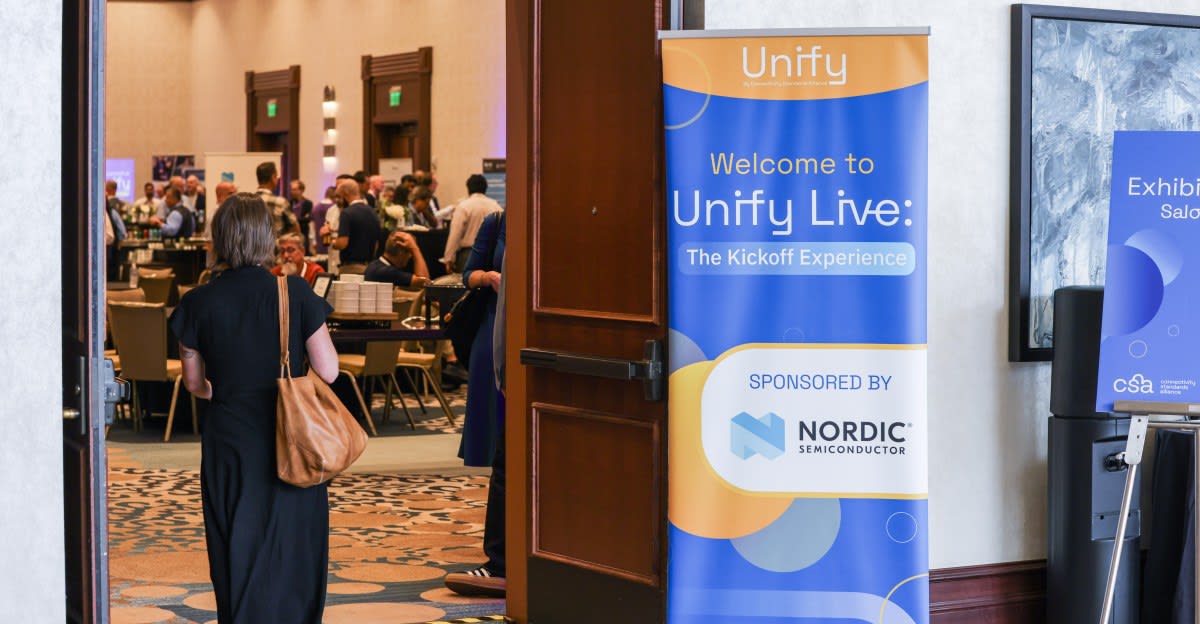
The smart home industry, after years of promising seamless interoperability, continues to place its bets on Matter. At the inaugural Unify conference by the Connectivity Standards Alliance (CSA), a nuanced picture emerged: while Matter hasn't fully delivered on its ambitious initial vision, a palpable sense of renewed conviction suggests it's closer than ever to fulfilling its potential. This report, based on observations from Austin, Texas, dives into the standard's current state, its challenges, and the persistent efforts to make it the universal language of smart homes.
Four years ago in Amsterdam, Matter was launched as the "one interoperability standard to rule them all," a collaborative effort by giants like Apple, Google, Amazon, and Samsung. It pledged to dismantle walled gardens, simplify device setup, and ensure universal compatibility without expertise. However, its real-world implementation has fallen short. Users still grapple with finicky setups, unreliable cross-ecosystem sharing, and the continued necessity of manufacturer apps for specific features. As one CEO noted, "Matter long-term won't be successful until everybody can use it at parity."
Last week's Unify conference served as a critical pulse check. The CSA has designated 2025 as the year to "fix" Matter, and significant strides are evident. A key announcement was Matter 1.6, introducing "Joint Fabric" – a groundbreaking feature designed to create a single, unified smart home network controllable by any Matter platform. This aligns with the original vision, but its success hinges on major platforms adopting it, a persistent obstacle for Matter to date.
A recurring concern among industry representatives, from silicon vendors to ecosystem giants, is the growing disparity between Matter's technical specifications and their actual implementation by platforms. This disconnect, as CSA CEO Tobin Richardson subtly acknowledged ("We’re on the path... we still have a few more milestones"), breeds consumer confusion rather than alleviating it.
Fundamentally, Matter is an open-source, IP-based connectivity layer developed by the CSA (including Apple, Amazon, Google, Samsung) to provide a common language for smart devices. It ensures secure, private, and local communication over Wi-Fi, Ethernet, and Thread. Supporting a vast array of devices from cameras to appliances, Matter promises multi-admin control across platforms like Amazon Alexa, Google Home, Samsung SmartThings, and Apple Home.
Despite Matter 1.6's release, major platforms like Apple, Google, and Amazon are lagging, mostly supporting version 1.3 (two years old). While SmartThings aims for quicker adoption, Samsung hasn't integrated Matter into its appliances. George Yianni of Philips Hue perfectly captured the sentiment: "It would be great if, within a year of new features being published in the spec, it was broadly supported by the ecosystems." The standard has largely solved *what* devices can work together, but not *how quickly* all *companies* will implement those solutions.
The inherent tension between competing giants is undeniable, yet CSA CEO Richardson stresses that a larger, unified market benefits everyone. Technologist Kevin Ashton's advice resonates: companies need "to be brave enough to compete on features and benefits rather than trying to build a prison for your customer." The CSA's role is to foster this "painful but necessary collaboration," as Jon Harros, head of testing and certification, notes, evidenced by initiatives like the Interoperability Lab.
Despite the slow adoption pace, the industry's long-term commitment is robust. A compelling example is the extensive, cross-company collaboration triggered by Ikea's problematic Matter-over-Thread rollout. Engineers from various ecosystems dedicated a week to intense troubleshooting with Ikea, even tracking down ISP router manufacturers to address bugs. This level of unprecedented inter-company problem-solving underscores a deep investment in Matter's ultimate success, signaling that major players are "in it for the long term," despite individual company strategies.
While engineers are clearly dedicated, lingering questions remain about management's sustained commitment. Apple's approach seems steady, and Google shows renewed interest, but Amazon presents a concern, leaning more towards "we support everything" rather than fully embracing Matter as the optimal solution, especially with its increased focus on proprietary Sidewalk protocol. Nevertheless, Matter's overall trajectory is strong. With over 1,200 unique certified products, 940 member companies (including new board member ADT), and a significant surge in Thread protocol interest, Matter is not in danger of failing.
The ultimate litmus test for Matter's success, as articulated by this author, is when a simple act like handing an 80-year-old father a Matter lightbulb results in effortless setup. Manufacturers like Philips Hue's Yianni confirm that Matter, while the "definitive smart home interoperability mechanism," remains overly complex for users, largely due to slow ecosystem adoption. The initial Matter experience for Hue users was, in fact, worse, highlighting the need for immediate improvements.
The industry's communication strategy to consumers has been lacking. The reliance on "Works With" badges, as Yianni argues, is a "crutch." Most consumers expect things "just to work" and shouldn't need to decipher compatibility badges. Retailers, too, depend on these badges to minimize returns. The goal is for the Matter logo to become universally recognized and trusted, akin to Wi-Fi or Bluetooth, making the absence of Matter on a smart device as unthinkable as a router without Wi-Fi.
Ultimately, Matter's core promise is trust: trust that devices will simply work. While we haven't reached that ideal state where handing a smart bulb to a technophobe guarantees success, the momentum from Unify and the evident, ongoing industry investment suggest Matter is closer than ever to fulfilling its ambitious vision. The path forward demands swifter platform adoption, simplified user experience, and a unified message that the Matter logo *is* the guarantee of a truly smart home.
المصدر: عرض الخبر الأصلي


 مرحبا، أسمي زين وهذه مدونتي أسعى دائما لأقدم لكم أفضل المواضيع الخاصة بالتكنلوجيا
ليست هناك تعليقات:
إرسال تعليق